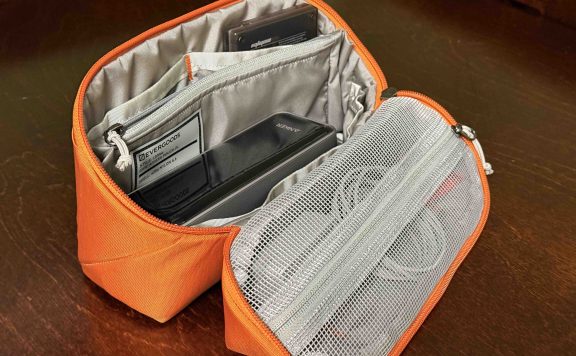
Let’s be honest: most gaming bags are an afterthought. Cheap nylon shells, foam inserts that compress after a month, and zippers that feel like they were sourced from the discount bin. I’ve gone through more bags than I care to admit trying to haul my handhelds around without cringing every time something clanks against something else. So when WaterField agreed to send a Versus Gaming Sling for review, I had a feeling something different was coming, and I wasn’t wrong. A huge THANK YOU to Waterfield for this review unit!
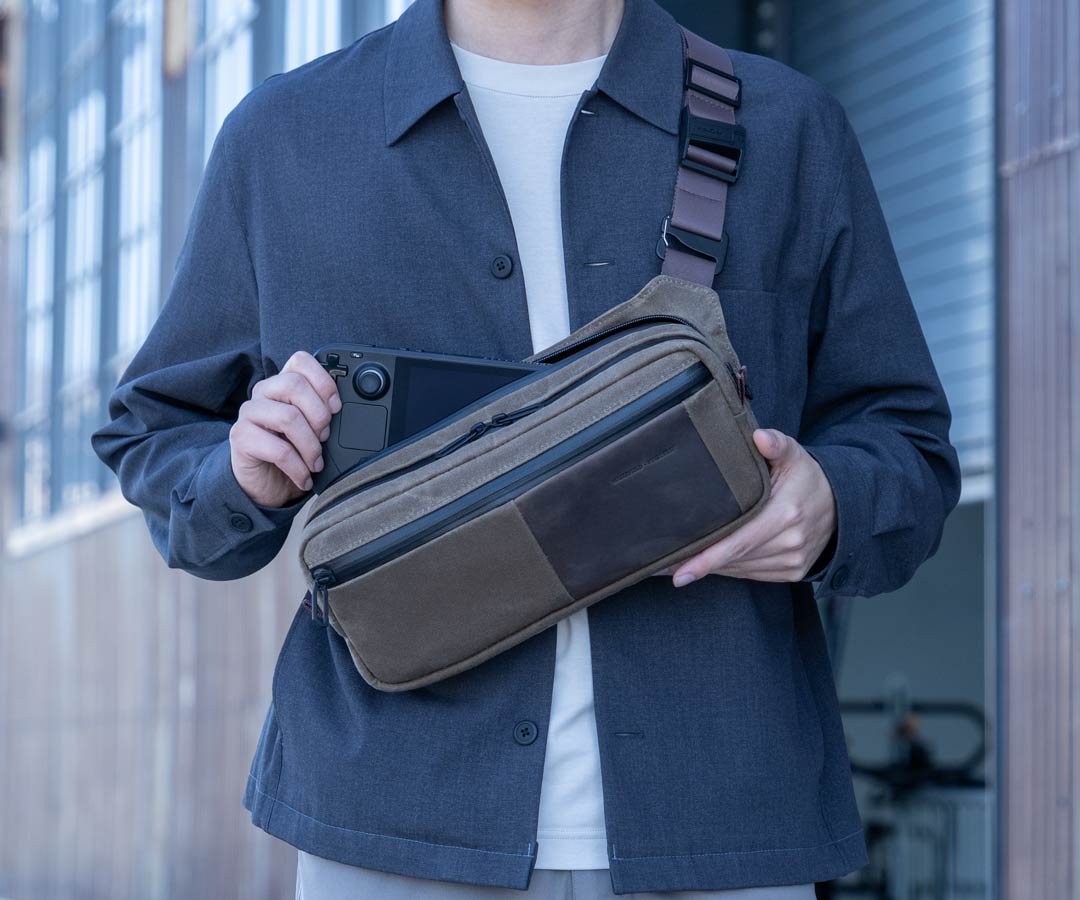
WaterField has been handcrafting bags in San Francisco since 1998, and if you’ve ever held one of their products, you know immediately that these aren’t mass-produced. Everything about the Versus signals that it was designed by people who carry devices, talk to customers who carry devices, and actually care what happens when that bag takes a hit. This is the bag for the gamer who has a Steam Deck for PC titles, a Switch 2 for Nintendo’s world, and doesn’t want to choose which one to leave at home.
My review unit is the waxed canvas version with chocolate leather accents — the most rugged and characterful option in the lineup (in my opinion), and honestly the hardest to photograph because it just keeps looking better every time I put it on.
Quick Facts
| Price: $229 | Dimensions: 12.5″ × 4″ × 5.5″ |
| Capacity: 4.5 liters | Weight: 1.1 lbs (ballistic) / 1.3 lbs (canvas) |
| Strap Length: 48″ adjustable | Made In San Francisco, USA |
| Materials: 1050D Ballistic Nylon or 15 oz. Waxed Canvas + Full-Grain Leather | |
Build Quality & Materials — 10 / 10
Crafted, Not Manufactured
I want to start here because the moment this sling arrived and I unzipped it, the first thing I noticed wasn’t a feature, it was the smell. That unmistakable scent of full-grain leather. Not the fake, sprayed-on kind. Real leather, sourced from the toughest part of the hide, accenting the zipper pulls and the strap hardware in a way that quietly says quality without screaming about it.
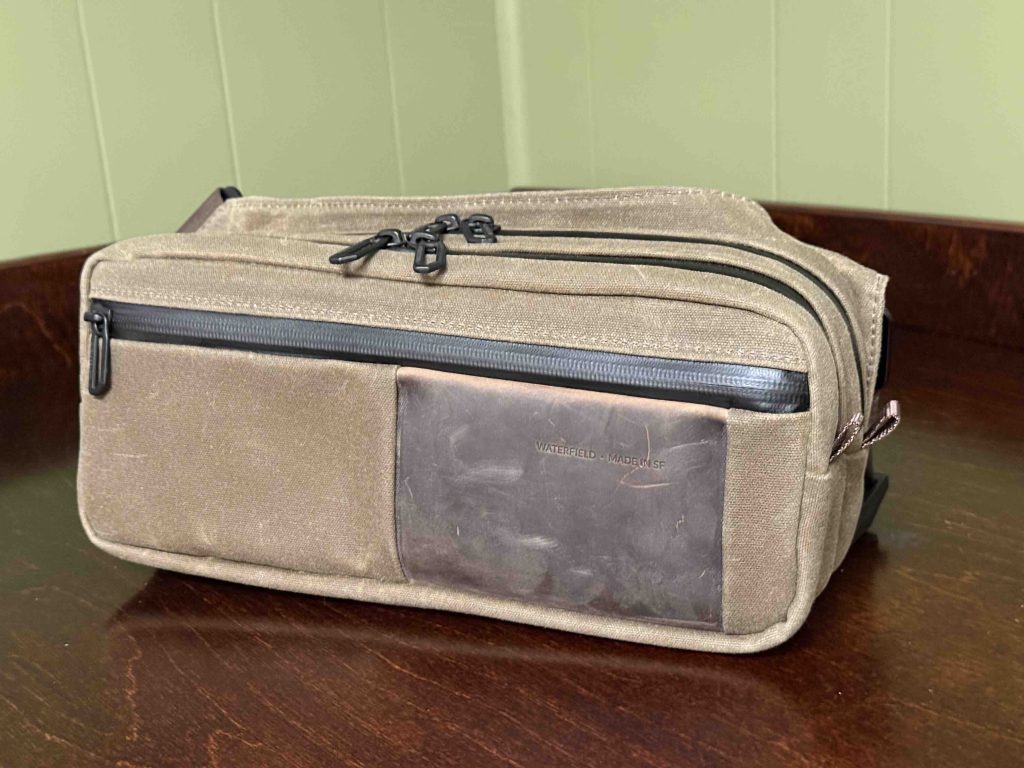
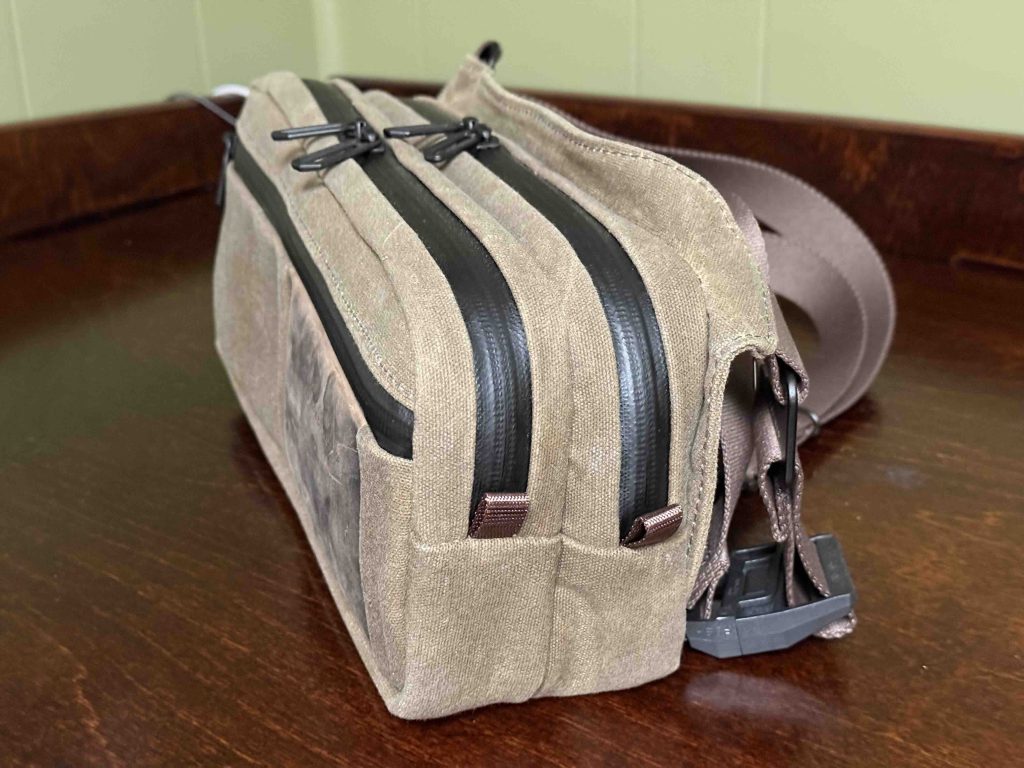
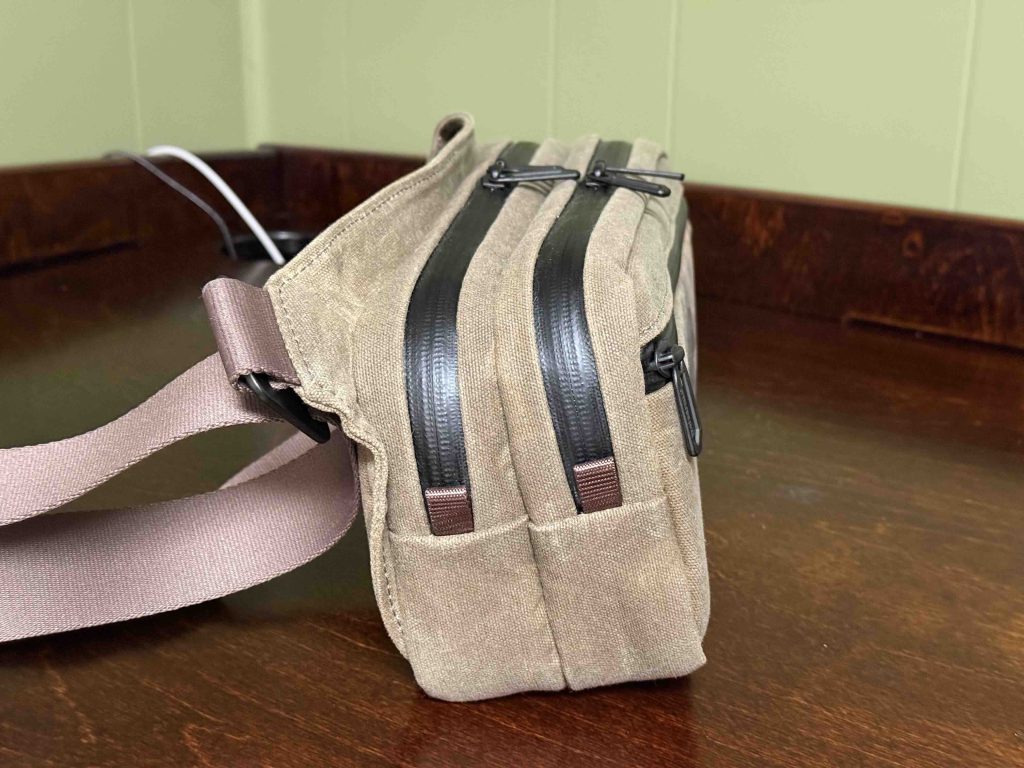
The waxed canvas version I’m reviewing is a heavyweight 15-ounce material that feels so well-made, structured, substantial, and water-resistant. WaterField sources their canvas from a mill that’s been producing waxed fabrics since 1930, and it shows. If you prefer a more technical look, the ballistic nylon option uses 1050-denier fabric (the same class of material found in bulletproof vests) and it’s equally serious about its job.
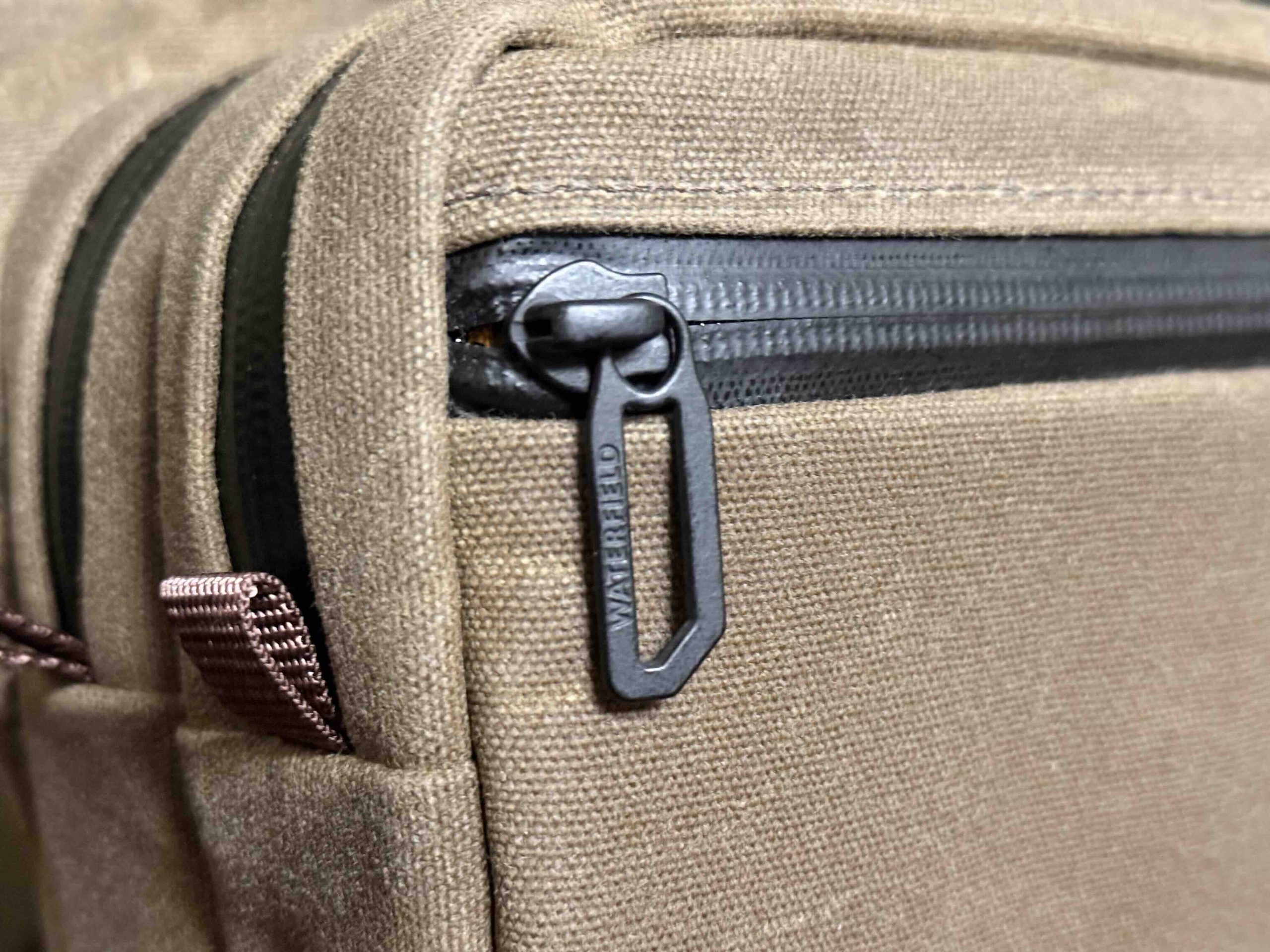
The zippers are YKK, water-resistant, and come with lock-compatible custom pulls that feel substantial in hand. All the hardware is metal. Nothing rattles. Nothing feels like it came from a bargain wholesale catalog. The gold ripstop lining inside the front compartment is the kind of detail you don’t know you need until you’re digging for a cable in a dark room and can actually see what you’re doing.
This is a bag that will develop a patina, get better-looking with age, and outlast the consoles you put in it. That’s not hype, that’s just what good materials do.
Device Protection — 9 / 10
Your Consoles Deserve Better Than a Sock
The rear compartment is the heart of this bag, and WaterField engineered it like they were designing a protective case first and a sling second. The interior is lined with soft padded material on all sides, and the two interior padded panels that sandwich your device protect the screen while doubling as storage for game cards and flat accessories. Sneak your cartridges or a microSD adapter in there while keeping them physically off the screen.
Closed-cell foam reinforces the front, back, and base of the bag, which means it holds its shape and absorbs impact like a proper travel case. The front compartment is more flexible by design. It handles a second device, accessories, or daily essentials well, but it doesn’t match the rear slot’s dedicated padding. That’s a design trade-off worth noting, not a flaw.
Organization & Storage — 9 / 10
A Place for Everything
The front compartment gives you three stretch-mesh pockets for small items (earbuds, cartridges, USB-C adapters) plus two open pockets for larger gear like a folded charging cable. The external zippered pocket on the front face handles a phone or card case without cracking the main bag open. A slim-to-mid-size power bank lives comfortably alongside your other accessories without forcing you to choose between charging gear and a second device.
The Versus is a capable everyday carry bag that happens to be great for gaming, and the reverse is equally true.
Carry Comfort & Wearability — 9 / 10
The Fidlock Factor
The Versus uses a Fidlock magnetic buckle, and if you’ve never experienced one, prepare for a small daily delight. Traditional plastic buckles require you to find the slot, line up the prongs, and click it shut. The Fidlock uses magnets to guide the buckle into place. One-handed, without looking, without lifting the bag over your head. It becomes completely natural within a week, and going back to a standard buckle feels like stepping backward.
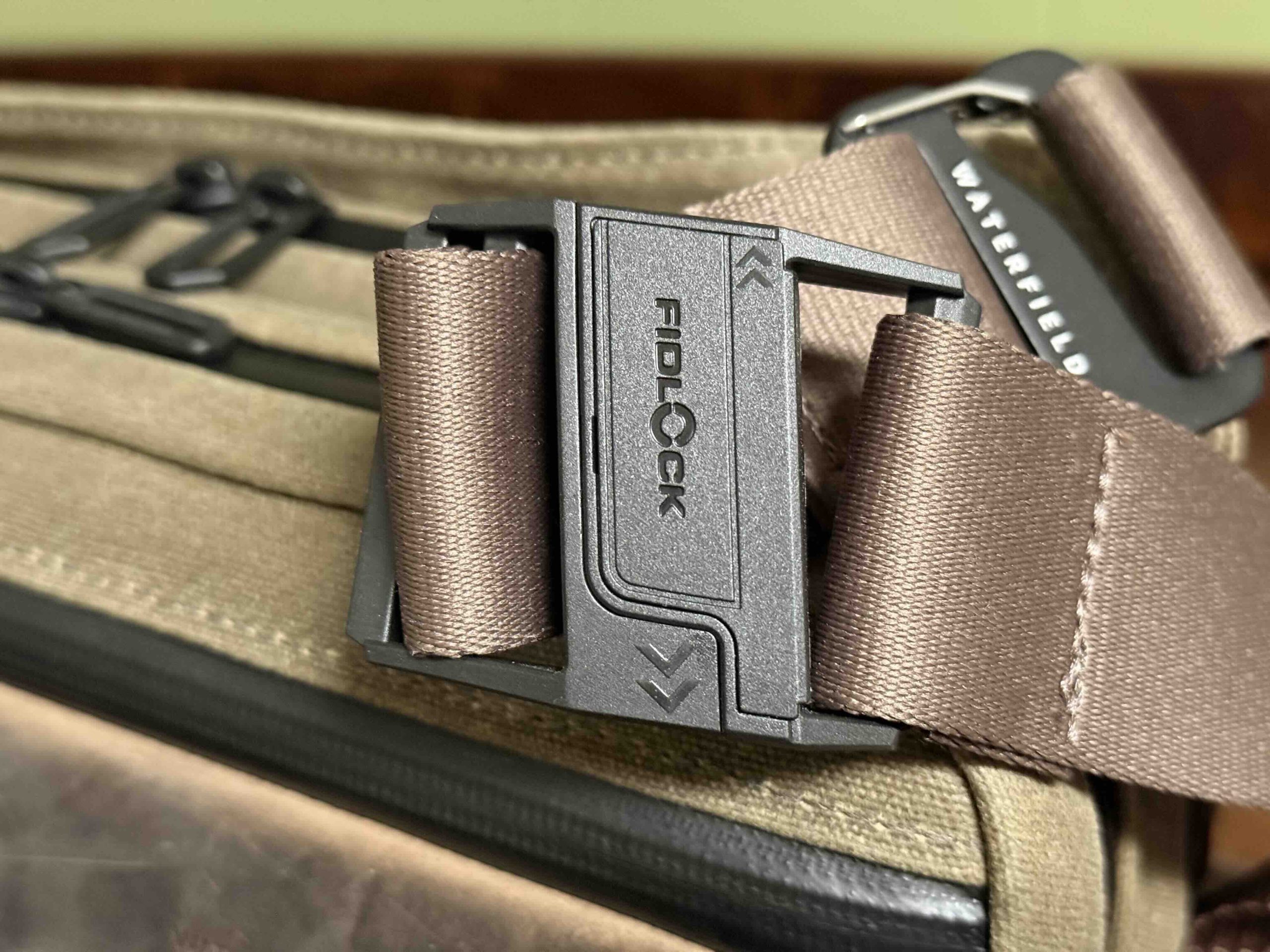
The adjustable strap uses a metal tri-glide buckle that holds its position all day with no slipping. The strap also detaches entirely via gated hooks, converting the Versus into a standalone padded gaming case you can set on a table or tuck into a larger bag during travel. I’ve actually used it this way. It’s not just a marketing bullet point.
Device Compatibility: What Fits?
Real Consoles, Real Results
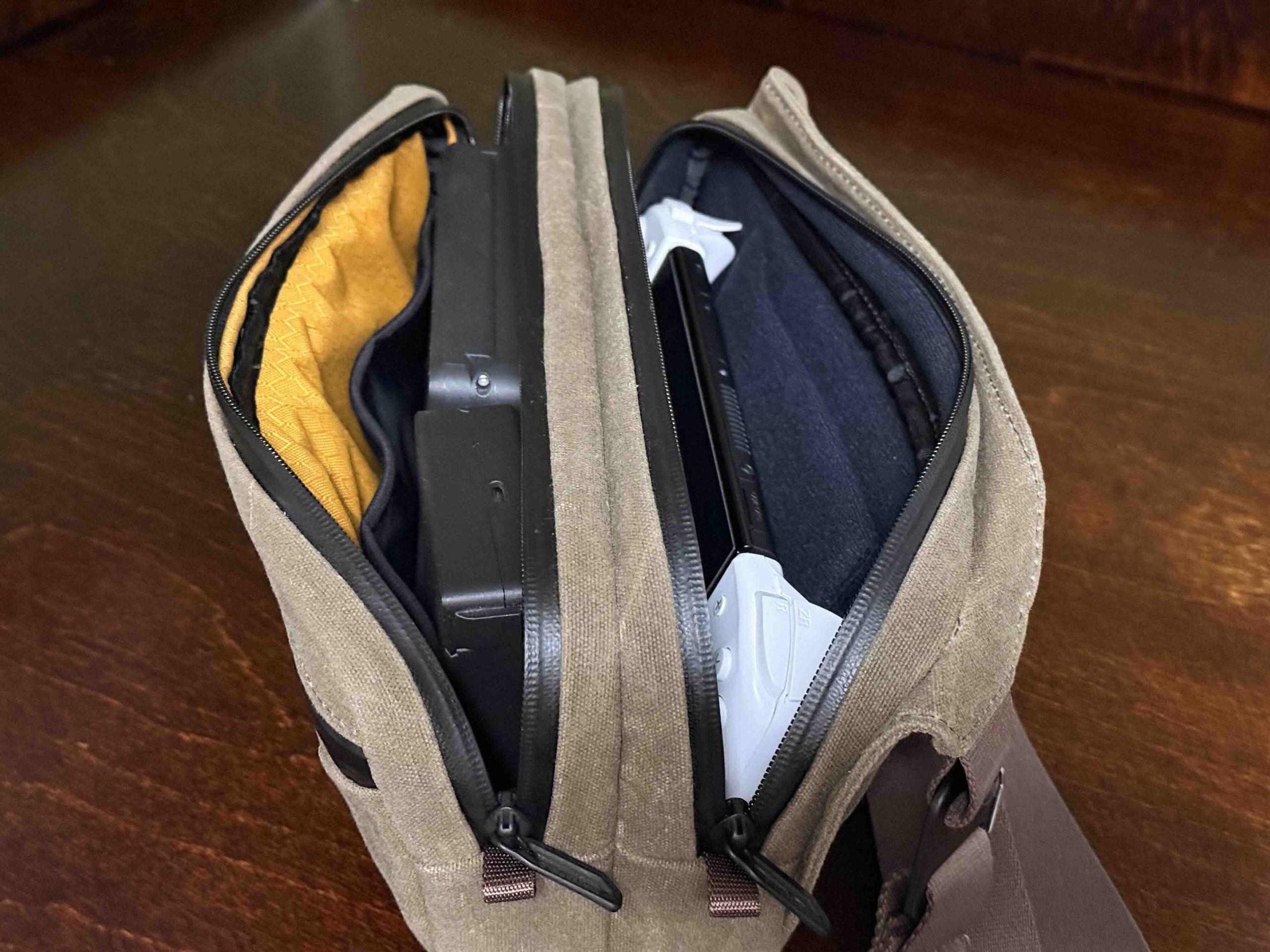
This is where things get practical. I have a collection of handhelds spanning several generations and form factors, and I put several of them through their paces with the Versus. The rear compartment handles devices up to and including the Steam Deck OLED comfortably. The front compartment is the flexible zone — a second handheld, or organized accessory and daily-carry storage when you’re running with a single device.
| Device | Slot | Fit | Notes |
|---|---|---|---|
| Steam Deck OLED | Rear (primary) | Excellent | Secure, snug fit with padded screen panels in place |
| Switch OLED + MOBAPAD Joy-Cons | Rear or Front | Excellent | MOBAPAD grips bring it to ~Steam Deck width; snug fit in either slot |
| AYN Thor (3D-printed case) | Rear or Front | Excellent | Slim form factor fits well; 3D-printed case adds bulk but still fits |
| New 3DS XL (WaterField CitySlicker) | Front | Excellent | Two WaterField products working together; frees the rear for a modern device |
| PS Vita (WaterField CitySlicker) | Front | Excellent | Slim profile leaves plenty of accessory room alongside it |
| Miyoo Mini Plus (3D-printed case) | Front / mesh pocket | Excellent | Small enough to slide into a stretch-mesh pocket; shows the bag’s full size range |
| New 2DS XL (thick Smatree case) | — | Case Won’t Fit | Too bulky in that case; the 2DS XL itself would fit fine with a slimmer sleeve |
The Steam Deck OLED is the obvious flagship use case, and the rear compartment was clearly sized with it in mind. The padded screen panels hold it securely without pressure on the analog sticks, and the closed-cell foam base means it isn’t bouncing around when you walk. This is the first sling I’ve used where I genuinely don’t worry about the deck.
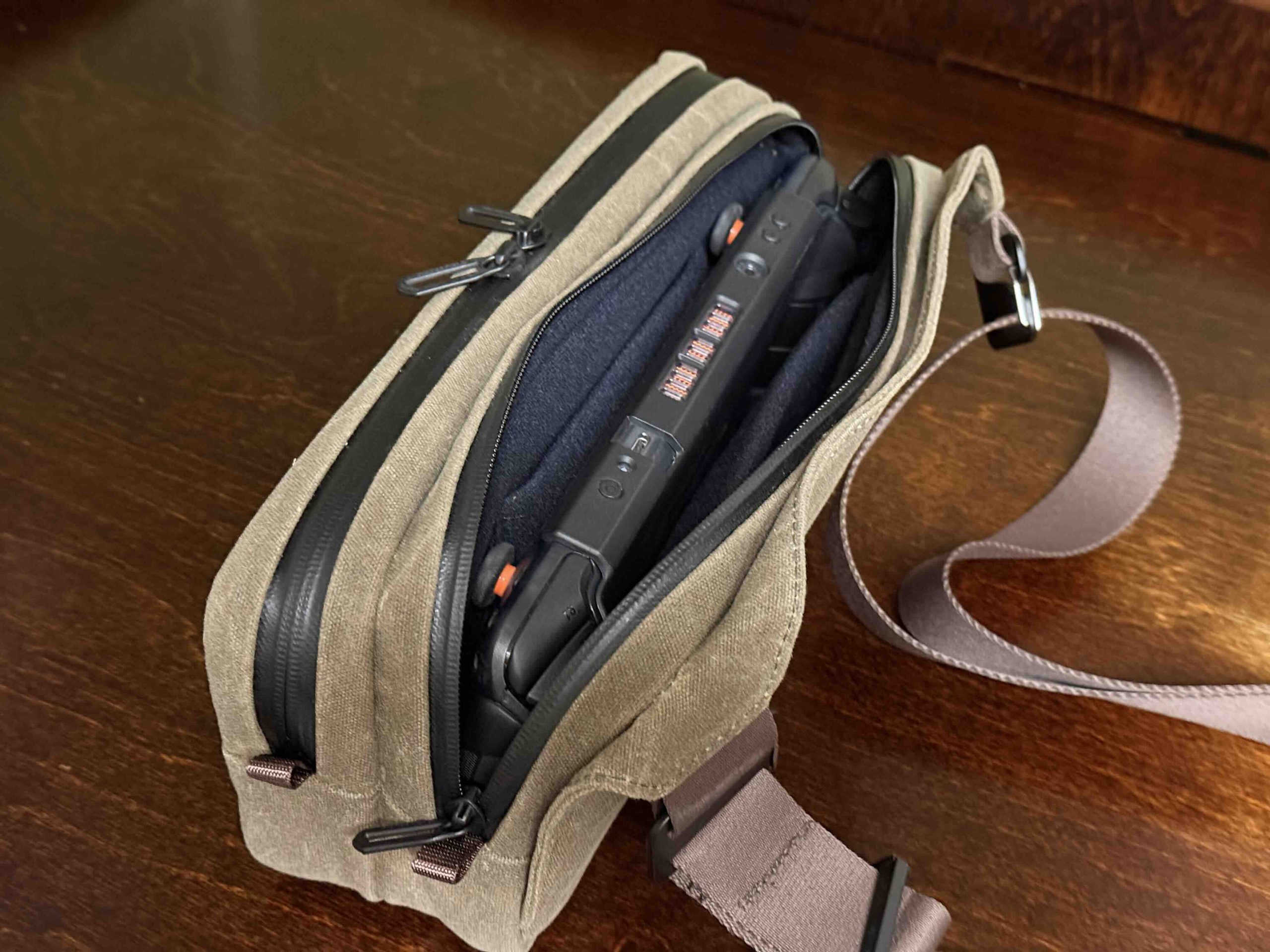
One combination I found particularly useful: Steam Deck in the rear, Switch OLED with MOBAPAD Joy-Cons in the front compartment, charger and a cartridge case in the stretch-mesh pockets. Two full gaming ecosystems on your back, organized and protected, in a bag that weighs just over three pounds loaded. The MOBAPAD grips are worth calling out specifically. They bring the Switch OLED to approximately Steam Deck width, so it fits the front compartment snugly rather than sliding around. A snug fit is a protected fit.
The New 3DS XL and PS Vita in their WaterField CitySlicker cases are a natural companion story for the Versus. Both ride in the front compartment alongside daily carry items, leaving the rear open for a modern primary device. There’s something satisfying about two WaterField products working together! The CitySlicker cases add a second layer of screen protection, and everything nests cleanly.
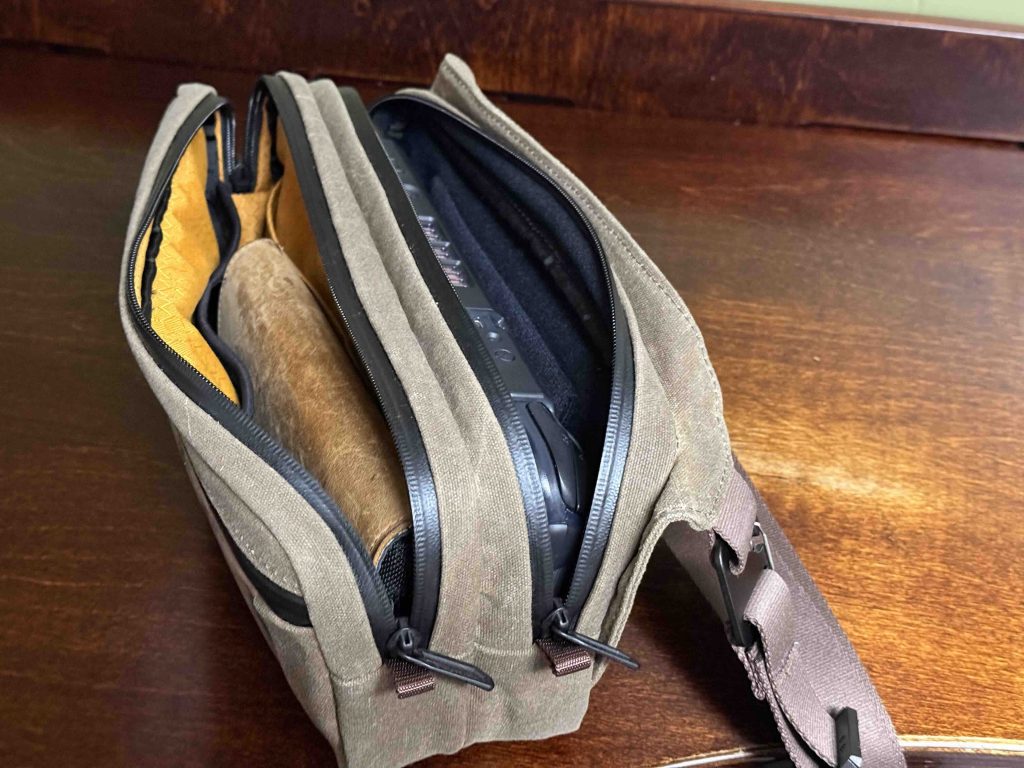
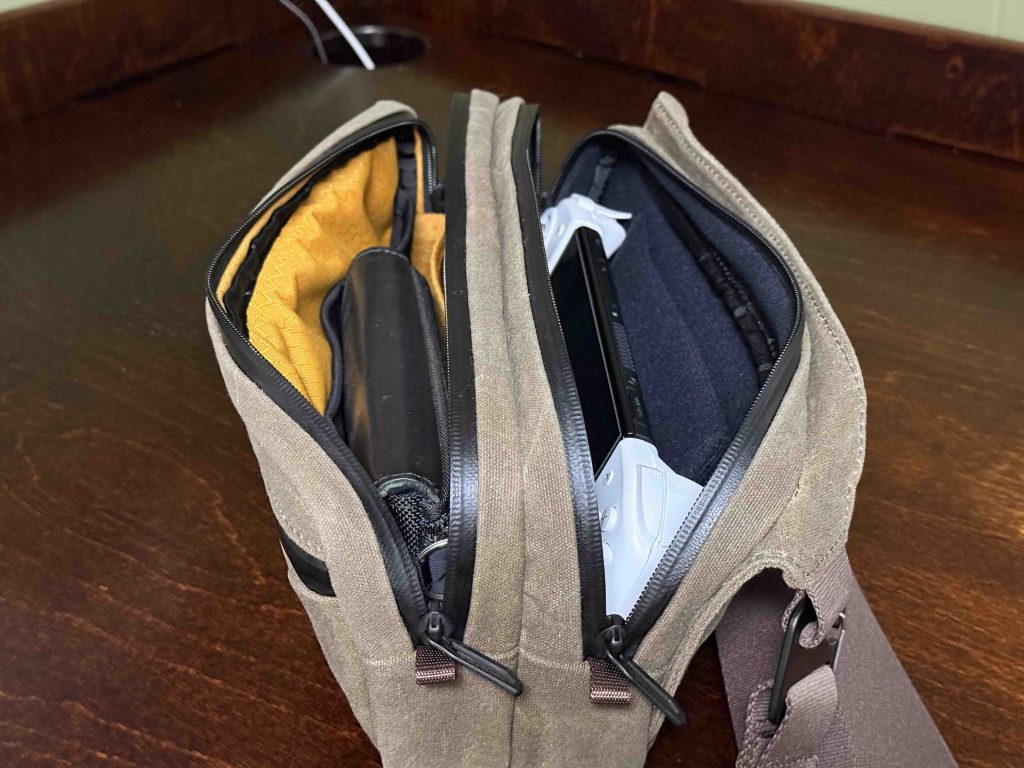
The Miyoo Mini Plus in its 3D-printed shell is almost comically small compared to what the Versus is built to handle, but that’s actually a useful data point. The bag works at both ends of the handheld size spectrum. Whether you’re carrying the biggest modern device or the tiniest retro pocket machine, the Versus has a spot for it.
Daily Carry Versatility — 9 / 10
It Lives Outside of Gaming, Too
The low-profile design doesn’t broadcast “I have expensive electronics in here.” You can wear it to a concert, a coffee shop, a convention, or an evening out and it reads as a refined everyday sling. Nobody’s going to clock it as a gaming bag unless they know what to look for. On non-gaming days, the rear compartment handles a slim wallet and travel documents, the stretch pockets take a water bottle, and the front compartment fits a paperback and portable charger without issue. I found myself reaching for it on errand days just because it’s a well-organized, great-looking bag.
Design & Aesthetics — 9 / 10
Four Colorways, All of Them Good
The Versus comes in four configurations: three ballistic nylon options (black/black leather, black/chocolate leather, and black/white leather) plus the waxed canvas with chocolate leather that I have. All of them lean refined and understated. No logos screaming at strangers. No aggressive stitching. No RGB. Just clean lines, rich material textures, and hardware that catches the light nicely.
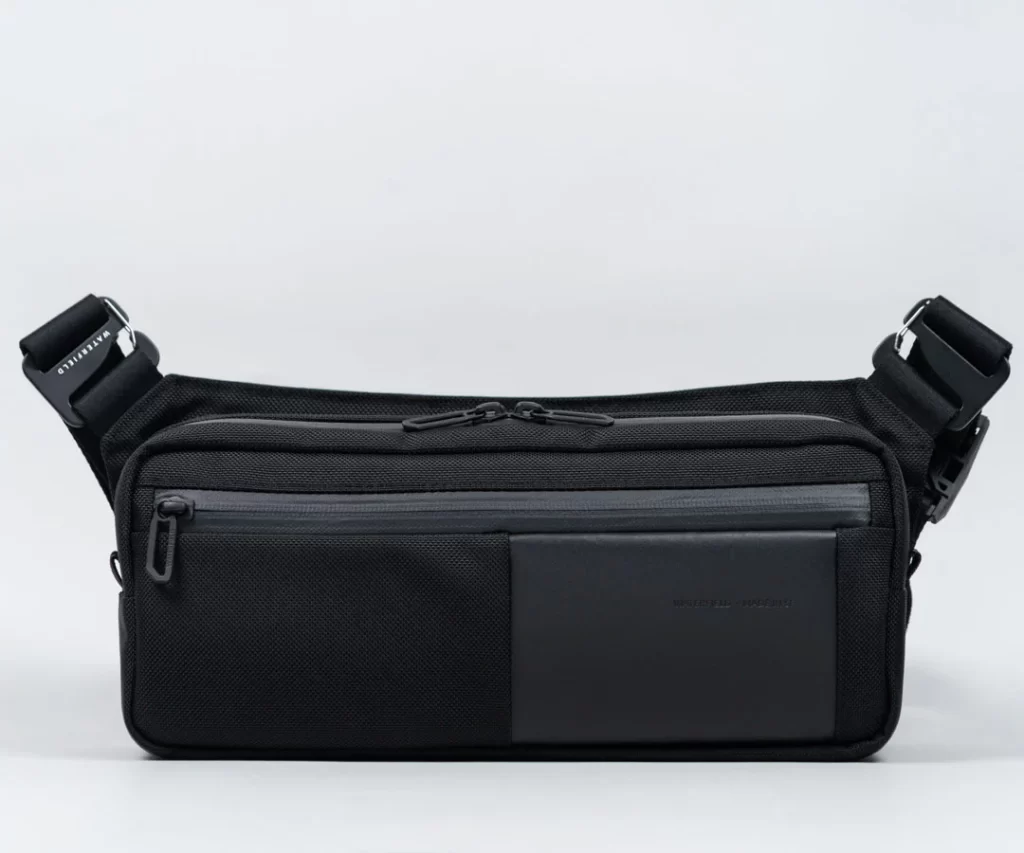
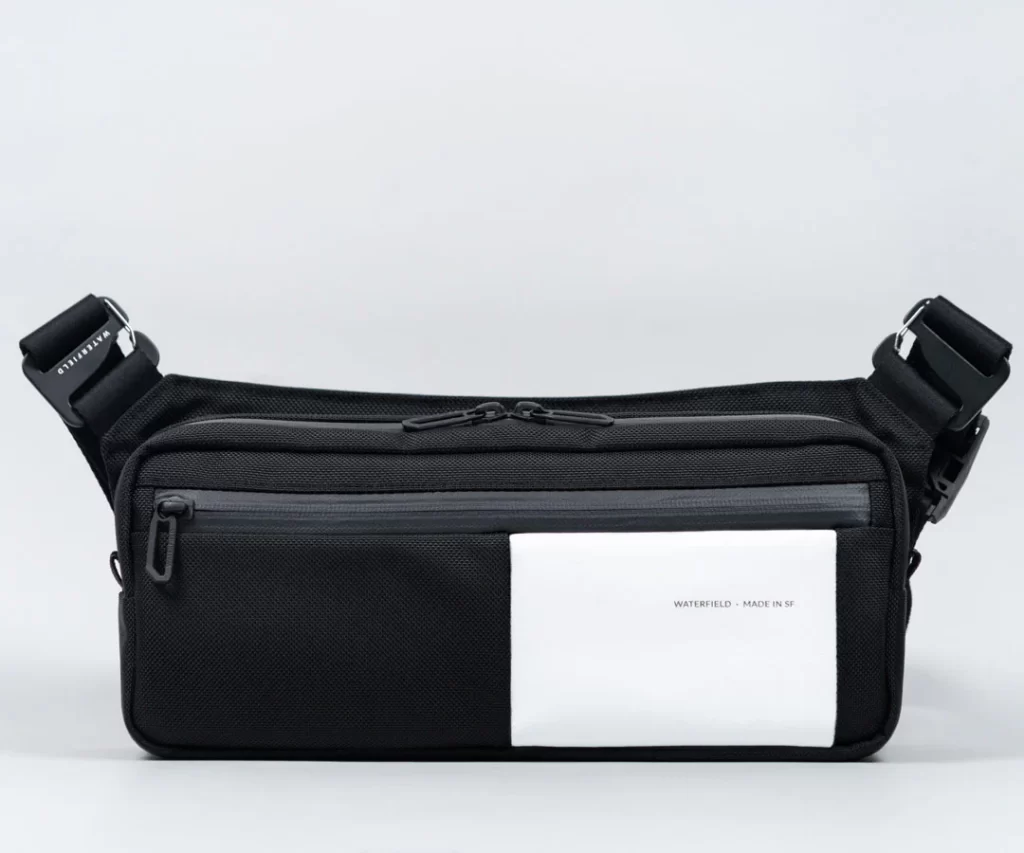
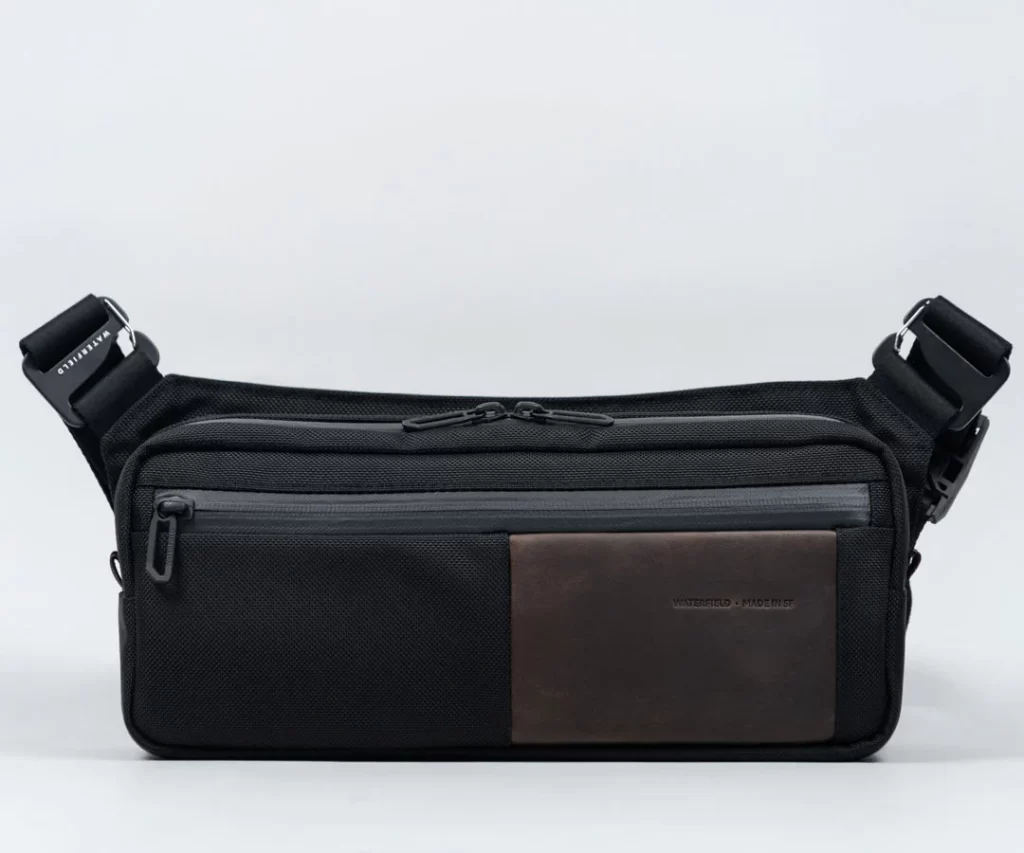
The waxed canvas develops character over time. Scuffs and weathering add personality rather than making the bag look worn out — it’s the kind of material that looks better at two years than it did at two weeks. The chocolate leather accents are warm and subtle, and they’ll darken and patina alongside the canvas as the bag ages.
Value for Money — 8.5 / 10
The Price of Doing It Right
$229 is real money. You can find gaming slings for $40, $60, even $100. What you won’t find at those prices is 15-ounce waxed canvas hand-stitched in San Francisco, full-grain leather accents, a Fidlock magnetic buckle, YKK water-resistant zippers with lock-compatible pulls, and a manufacturer with a 28-year track record. If you replace cheaper bags every year or two, you’ll spend more than $229 over time. This is a bag built to outlast the consoles you put in it. For what it is and what it will be for years to come, the value is real, but $229 is still $229, and that’s a genuine barrier for a lot of gamers.
| 🎮 | WaterField Versus Gaming Sling$229 • Ballistic Nylon or Waxed Canvas • Made in San Francisco, USA | View Product ↗ |
| 🏠 | WaterField DesignsHandcrafted bags and cases, made in San Francisco since 1998 | Visit Site ↗ |