I’ve been putting handhelds through their paces on this site for a while now, and I’ll admit the original TrimUI Brick never fully clicked for me. I loved what it was doing, that screen was genuinely special for the price. But the 3.2-inch panel felt like squinting at a postage stamp during anything longer than a quick session on my lunch break. So when LITNXT announced the Brick Pro, I was curious whether TrimUI had actually listened, or whether “Pro” was just going to mean a higher price tag on the same experience.
Turns out, they listened. Mostly.
The Specs
| Display | 3.95″ fully laminated IPS, 1024×768, 60Hz, 324 PPI |
| CPU / GPU | Allwinner A133P 1.8GHz / PowerVR GE8300 (660MHz) |
| RAM / Storage | 1GB LPDDR3 + 8GB eMMC, microSD up to 1TB |
| Battery | 5,000mAh, rated 5–10 hrs depending on workload, USB-C 10W (5V/2A) |
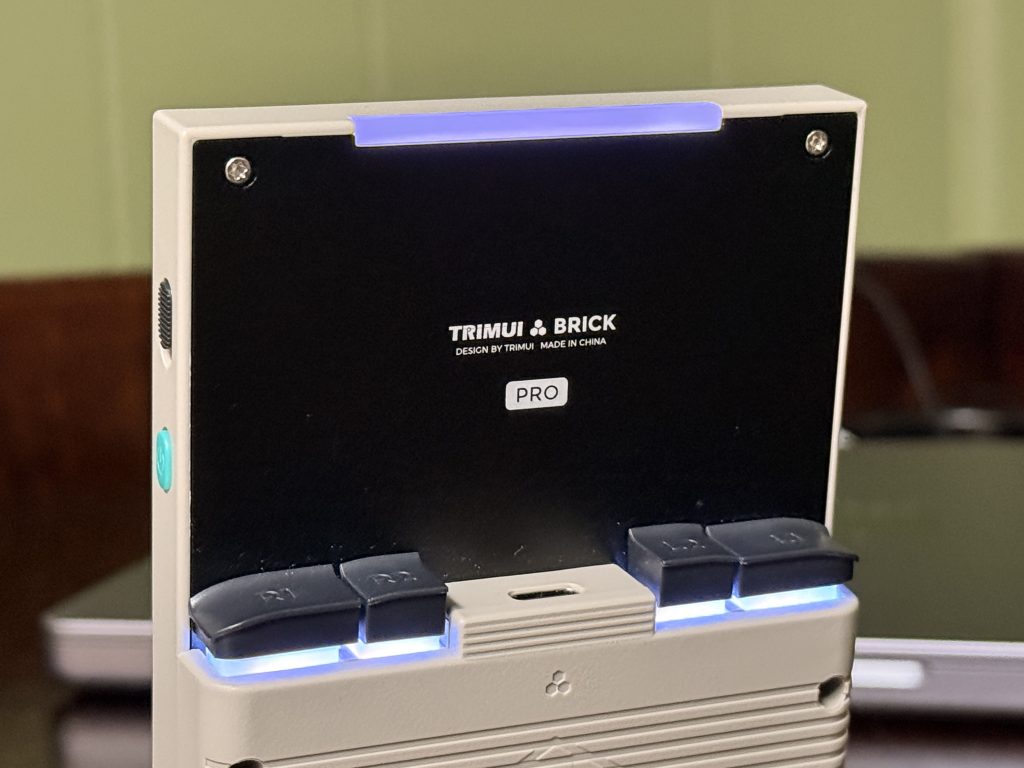
| Controls | 16 buttons, D-pad, ABXY, L1/L2/R1/R2, dual Hall effect sticks with clickable L3/R3, swappable shoulder-button caps |
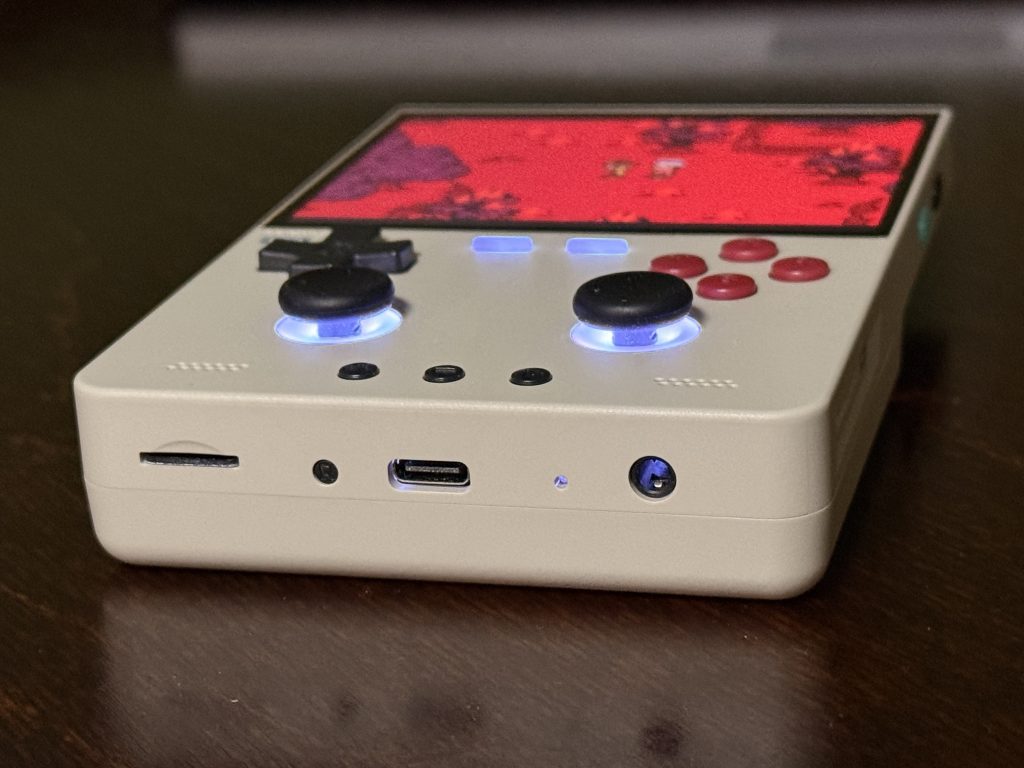
| Connectivity | USB-C (USB 2.0, DP Alt Mode for 1080p/60Hz out), Wi-Fi 4 (b/g/n), Bluetooth 4.2 |
| Audio | Dual 1W stereo speakers, 3.5mm headphone jack, built-in mic |
| Weight / Size | 236g, 130 × 86 × 22mm |
| OS | Surwish CrossMix OS (preloaded on my review unit); stock TrimUI Linux also available |
| Colors | Black, White/Silver, Retro Grey |
| Price | Starts around $99.99, LITNXT currently listing console-only from $105.79 with card bundles up to $159.99 |
First Impressions
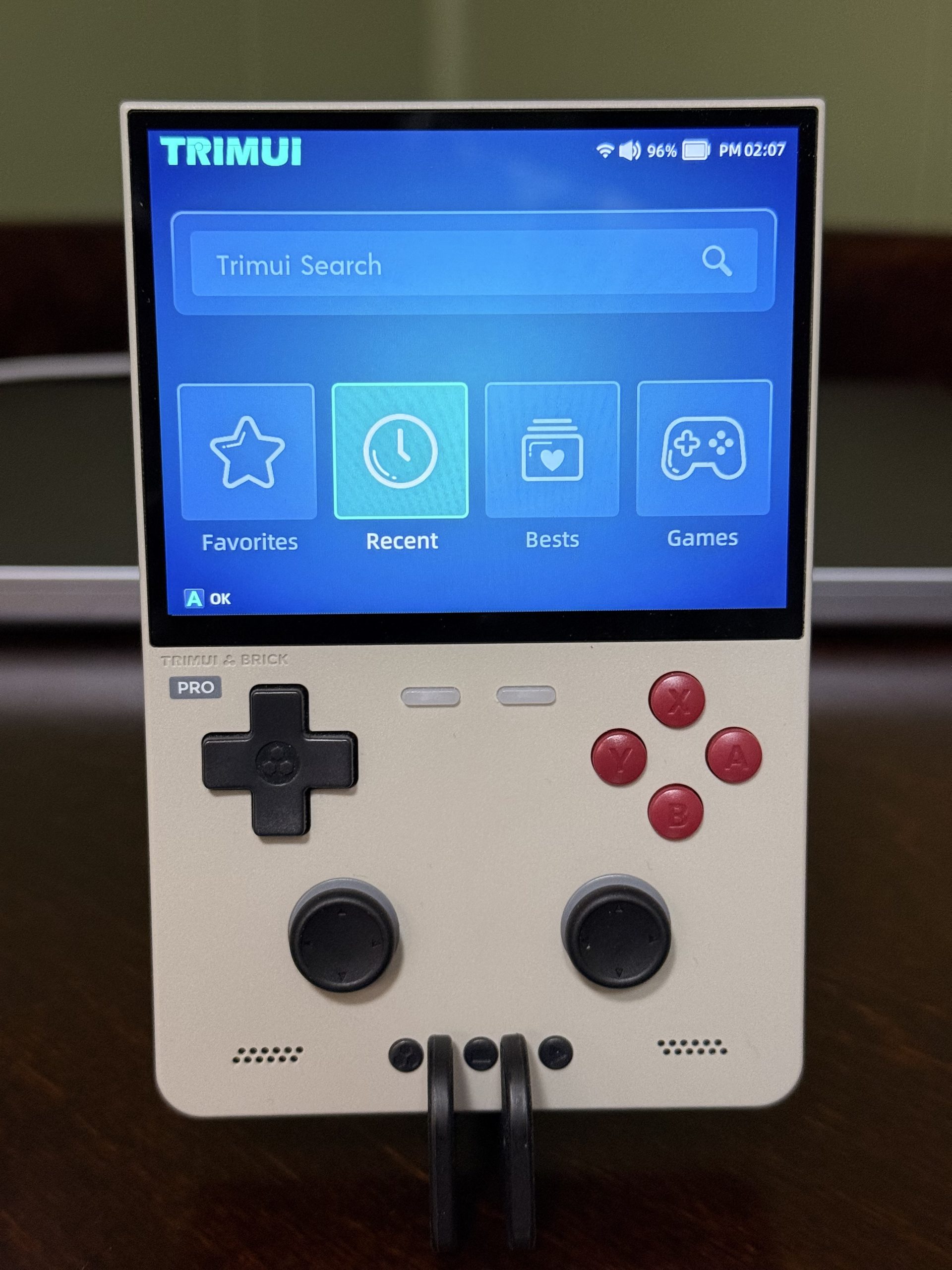
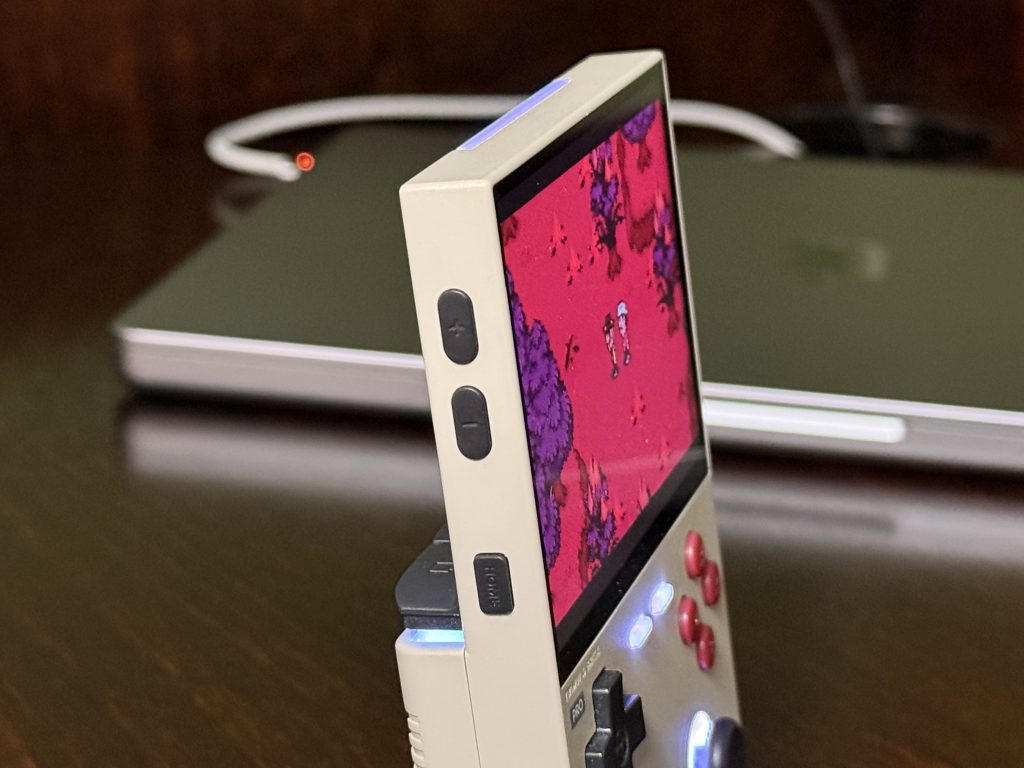
Popping the Brick Pro out of the box, the first thing you notice is that it’s not really the same size class as the original Brick anymore. TrimUI kept the same silhouette (vertical, boxy, Game Boy DNA all the way down) but everything about it is bigger. The bezels grew to fit that 3.95-inch screen, the battery compartment ballooned to hold a 5,000mAh cell, and the whole thing now weighs 236 grams, up from 159g on the standard Brick. In hand, that’s the difference between “disappears in a pocket” and “you know it’s there.” It’s still comfortable, and honestly it needed to grow. The tiny original always felt slightly cramped for anyone without kid-sized hands, but don’t go in expecting the ultra-pocketable original Brick experience. This is a different, bigger animal wearing the same jacket.
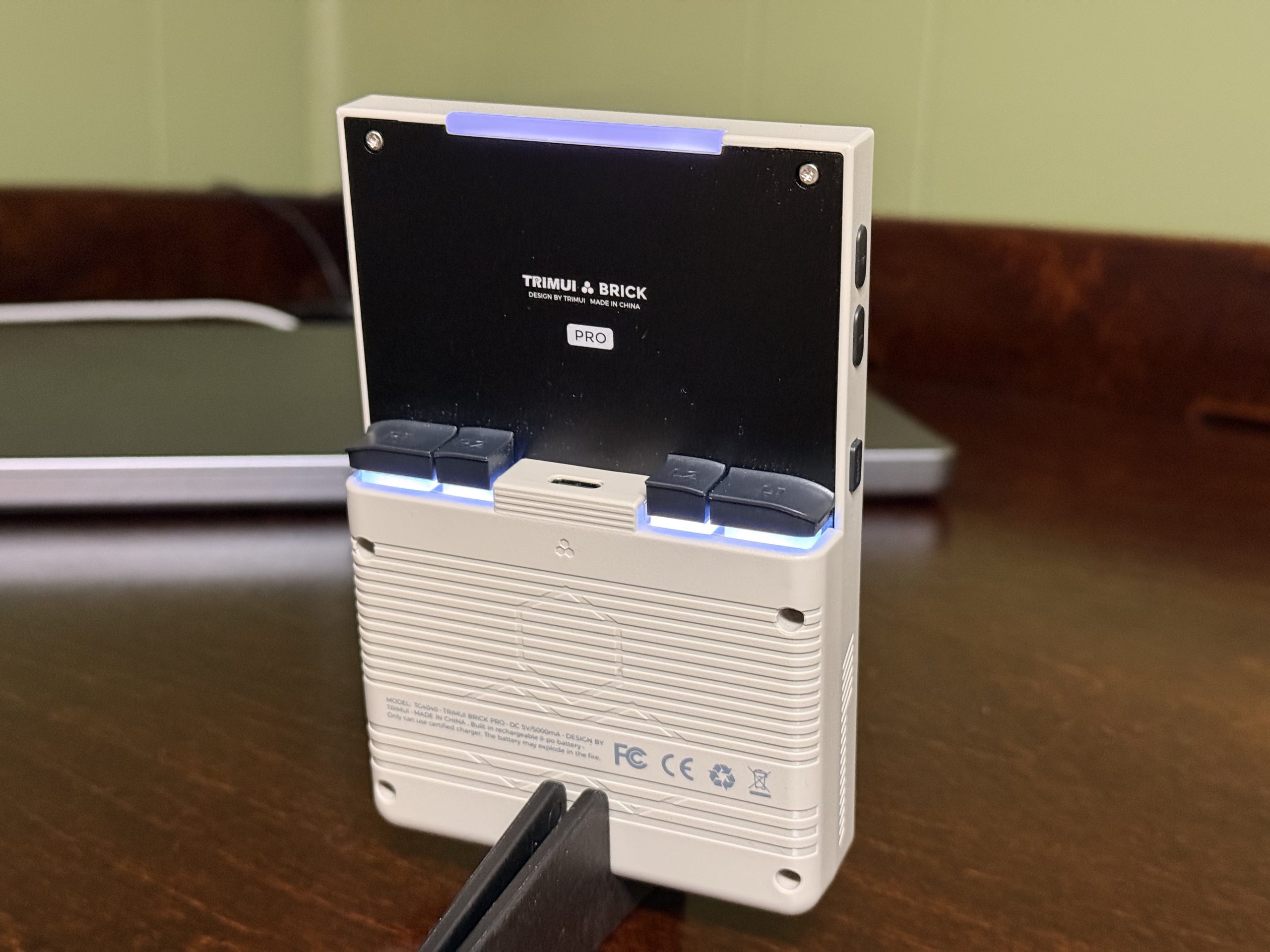
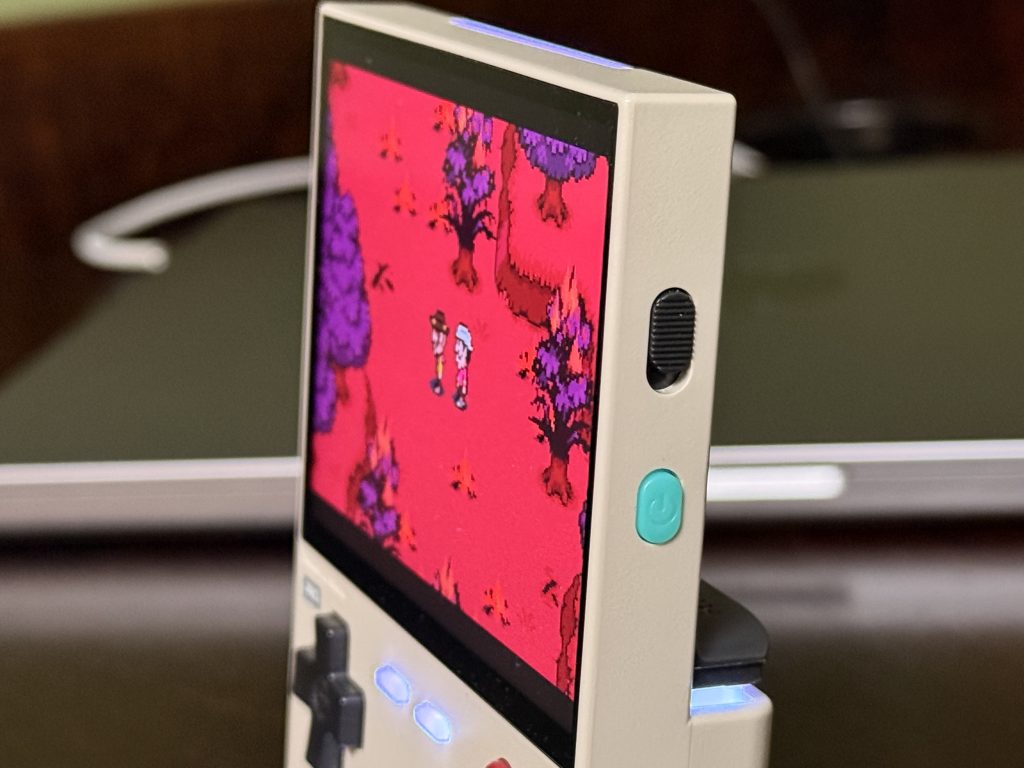
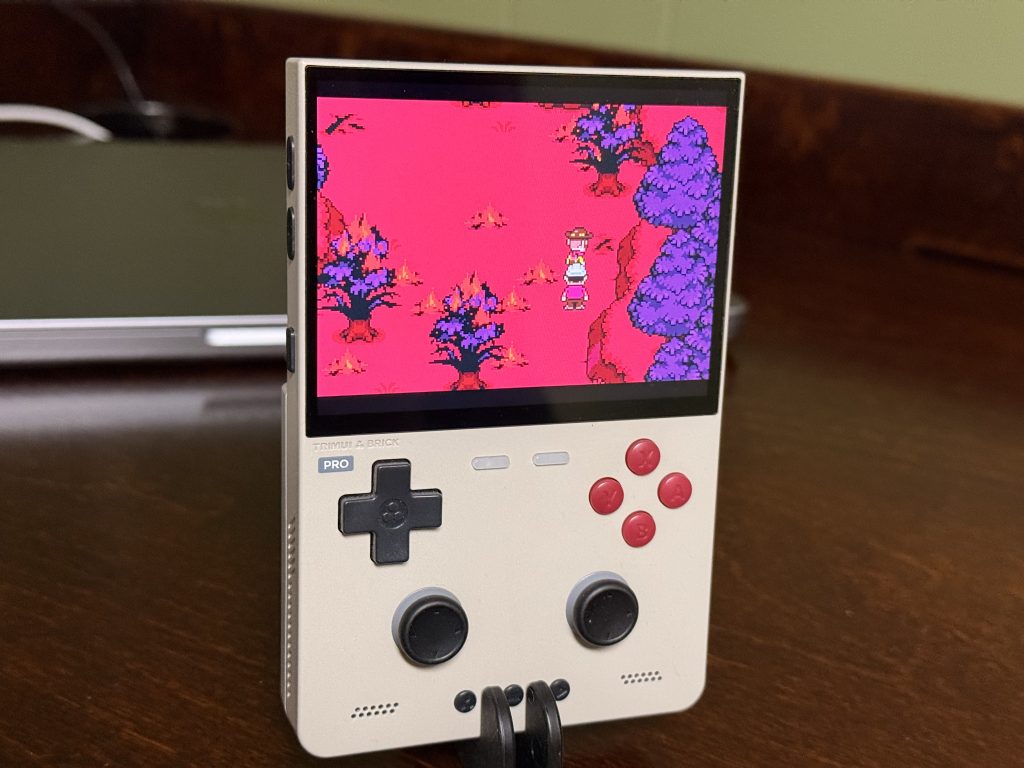
Build quality feels consistent with what I’ve come to expect from TrimUI. The shell is plastic (ABS and polycarbonate, not the aluminum you’ll find on the pricier Brick Hammer Pro U), but it doesn’t feel cheap. There’s no creak when you flex it, the buttons all sit flush and even, and the RGB lighting around the top rear panel and shoulder buttons gives it a little bit of flair without feeling gimmicky. It’s the kind of handheld that looks like it costs more than it does, which is exactly the trick TrimUI has pulled off with this whole lineup.
One nice touch from LITNXT specifically: my unit showed up with a 256GB card already loaded with a broad personal game library, spanning everything from 8-bit classics up through PS1 and a chunk of N64 and Dreamcast titles. That meant I could go straight from unboxing to actually playing, which made testing across generations a lot faster than starting from a blank card. If you buy through LITNXT, it’s worth checking exactly what’s included with the storage tier you pick, since that varies by bundle.
Design & Build Quality – 9/10
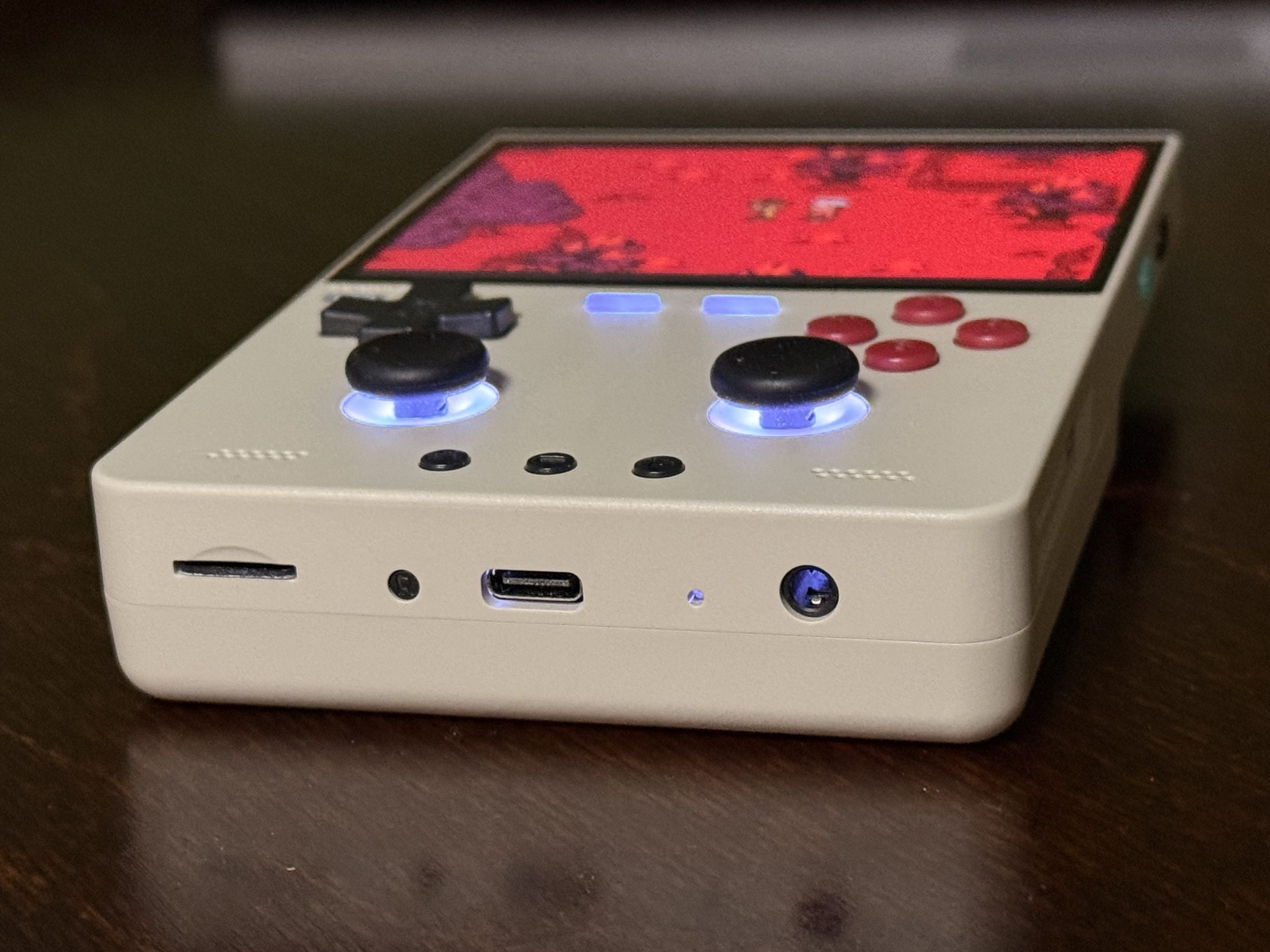
TrimUI didn’t reinvent the Brick’s shape, and I don’t think anyone wanted them to. This is a formula that works. The vertical, D-pad-up-top layout is still comfortable for two-handed play, and the growth in size actually helps here. My thumbs no longer feel like they’re fighting for space the way they sometimes did on the smaller original. The three included sets of swappable shoulder-button caps are a genuinely thoughtful touch at this price. You can change the height and feel of L1/L2/R1/R2 to match your hand size, which is the kind of detail I usually only see on handhelds twice this price.
Where it loses a point: the buttons don’t have quite the same crisp, clicky feel as the smaller Brick. They’re not mushy, but there’s a slight softness to the face buttons that the original’s micro-switches didn’t have. It’s a minor thing, but if you’ve spent time with the OG Brick’s buttons, you’ll notice it in the first five minutes.
Display – 9/10
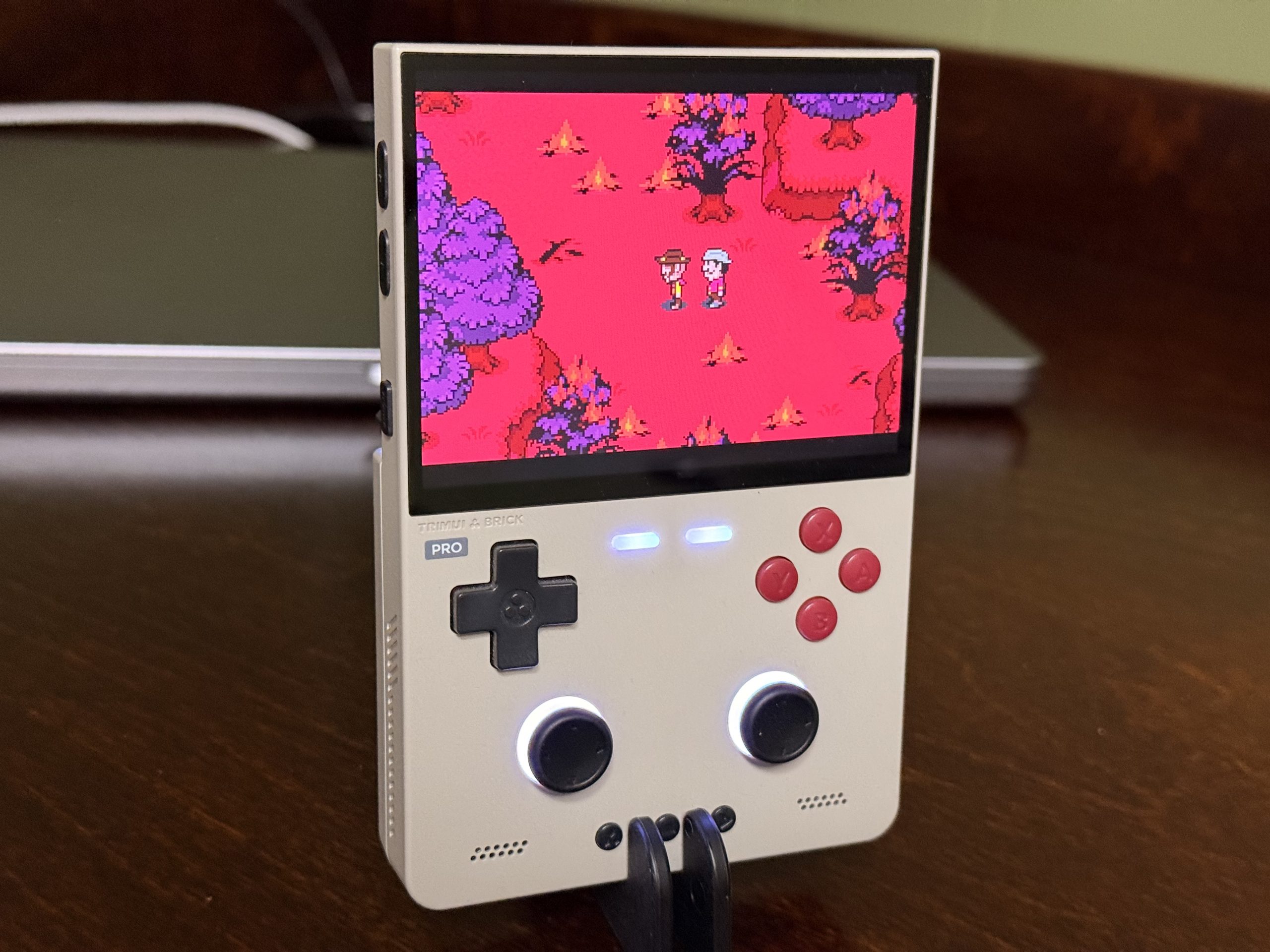
This is the whole reason the Brick Pro exists, and it delivers. TrimUI kept the exact same 1024×768 resolution from the original Brick and simply stretched it across a bigger 3.95-inch panel, which sounds like it should make things look softer (pixel density actually drops from around 405 PPI to 324 PPI) but in practice, the screen still looks fantastic. It’s fully laminated, so there’s no visible air gap between the glass and the panel, which makes colors pop and keeps reflections and glare to a minimum. Sprite-based classics look incredible here: bright, clean, with none of the muddiness you get on cheaper handheld LCDs.
The extra real estate matters more than the spec sheet suggests. Sixteen-bit era games that felt cramped on the 3.2-inch original now have room to breathe, and PS1-era 3D titles read a lot more clearly at this size. If you’re the kind of player who takes breaks during long sessions because a small screen gives you eye strain, this upgrade alone might be worth the price of entry.
Controls & Comfort – 8/10
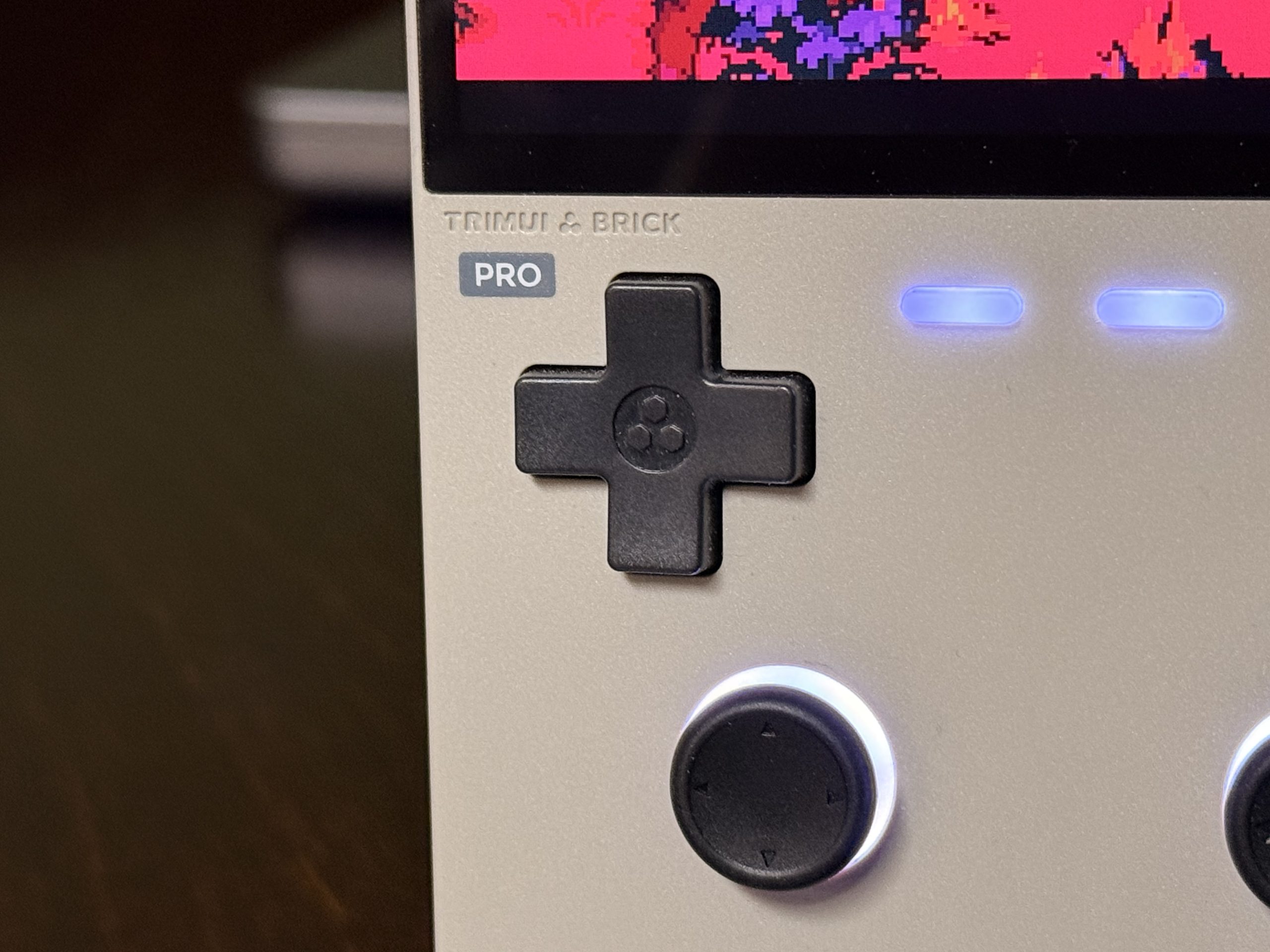
The headline addition here is the pair of Hall effect joysticks tucked below the D-pad and face buttons, real estate the original Brick simply didn’t have room for. These aren’t an afterthought either; Hall effect sensors mean no stick drift over time, which is a legitimately big deal on a budget device, since stick drift is usually the first thing to go on cheap handhelds. Throw range and precision feel good, and having actual analog control finally opens the door to N64 and other analog-dependent libraries in a way the D-pad-only original never could.
Comfort-wise, the added size works in the Brick Pro’s favor for anyone with average-to-larger hands. Longer sessions don’t leave my hands cramped the way the tiny original occasionally did. If you have small hands or specifically loved how pocketable the OG Brick was, know that this trades a chunk of that portability for the added comfort and control.
Performance & Playing Your Library – 7/10
Here’s the catch with the “Pro” name: this is not a more powerful device than the original Brick. TrimUI kept the same Allwinner A133P chip and PowerVR GE8300 GPU, so if you were hoping the bigger screen came with a bigger performance ceiling, it didn’t. That power upgrade exists; it’s just a separate, considerably more expensive device called the Brick Hammer Pro U, which runs on a Snapdragon chip and starts closer to $250.
On the Brick Pro itself, games from the NES, SNES, Game Boy Advance, and PS1 generations all ran essentially flawlessly out of my personal library, and that’s the sweet spot this device is built for. Game Boy Advance titles in particular look fantastic on this screen; bright, saturated, and exactly what that generation deserves. Push into Nintendo 64 or Dreamcast-era games and results get more situational: lighter titles play well, but more demanding ones will chug. Don’t go in expecting GameCube- or PS2-era games to run. That’s simply outside what this hardware was built to handle.
None of that makes it a bad performer. It just means you should buy this device for what it actually is: one of the best ways to carry your 2D and PS1-era library around, not a do-everything machine for every generation you own.
Battery Life & Charging – 8/10
The jump from the original Brick’s 3,000mAh cell to 5,000mAh here is one of the most meaningful upgrades on paper, and it holds up in practice. TrimUI rates it at 5 to 10 hours depending on what you’re playing, and that tracks with what I’ve seen. Lighter 8/16-bit games stretch toward the top of that range, while anything pushing the chip harder pulls it down faster. Either way, it’s a real improvement over the original, which could feel stingy on a long car ride or flight.
Charging is handled over USB-C at 10W (5V/2A), and it supports charge-while-playing without issue, which matters if you’re the type to plug in during a lull rather than stopping to top off.
Software & User Experience – 9/10
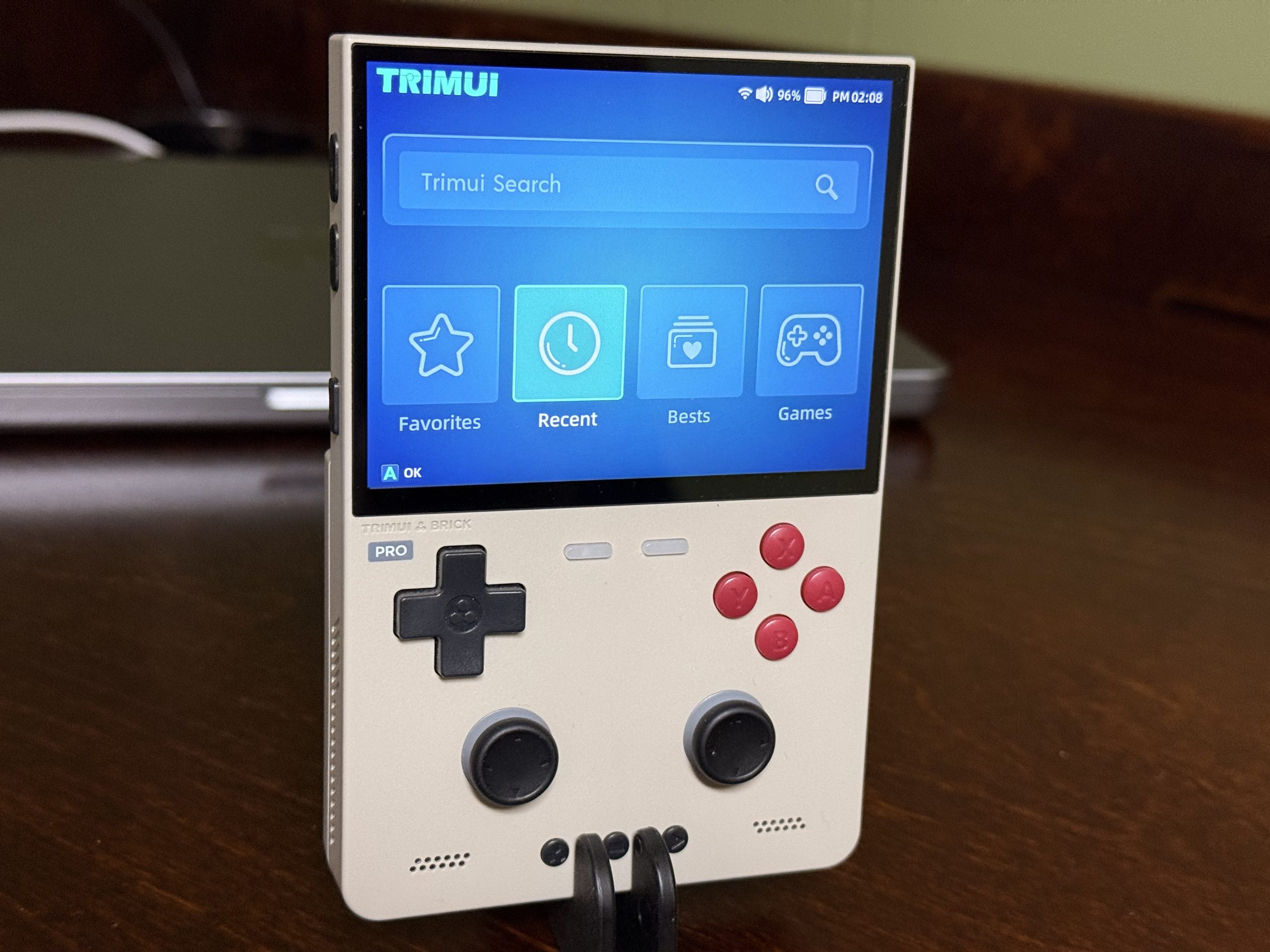
My review unit came from LITNXT preloaded with Surwish CrossMix OS rather than TrimUI’s stock firmware, and I was glad to see it. I’ve spent a good amount of time with CrossMix on the original TrimUI Brick, and running it here felt like coming home; same clean, grid-based library view with box art, the same reliable save-state handling, the same favorites and recently-played shortcuts, and the same deep theme and LED customization that makes the device feel personal within a few minutes of picking it up.
Functionally, CrossMix on the Brick Pro behaves identically to CrossMix on the smaller Brick. Menus feel just as snappy, navigation is just as intuitive, and nothing about the bigger screen or the new sticks required CrossMix to change how it operates. That consistency is a genuine point in its favor. If you already know your way around CrossMix on one TrimUI device, you already know your way around this one. Full stop, this is one of the best software experiences on a sub-$100 handheld, and it’s the reason I’d recommend buying this preloaded rather than hunting down firmware yourself.
Living With It: Everyday Carry & Portability – 9/10
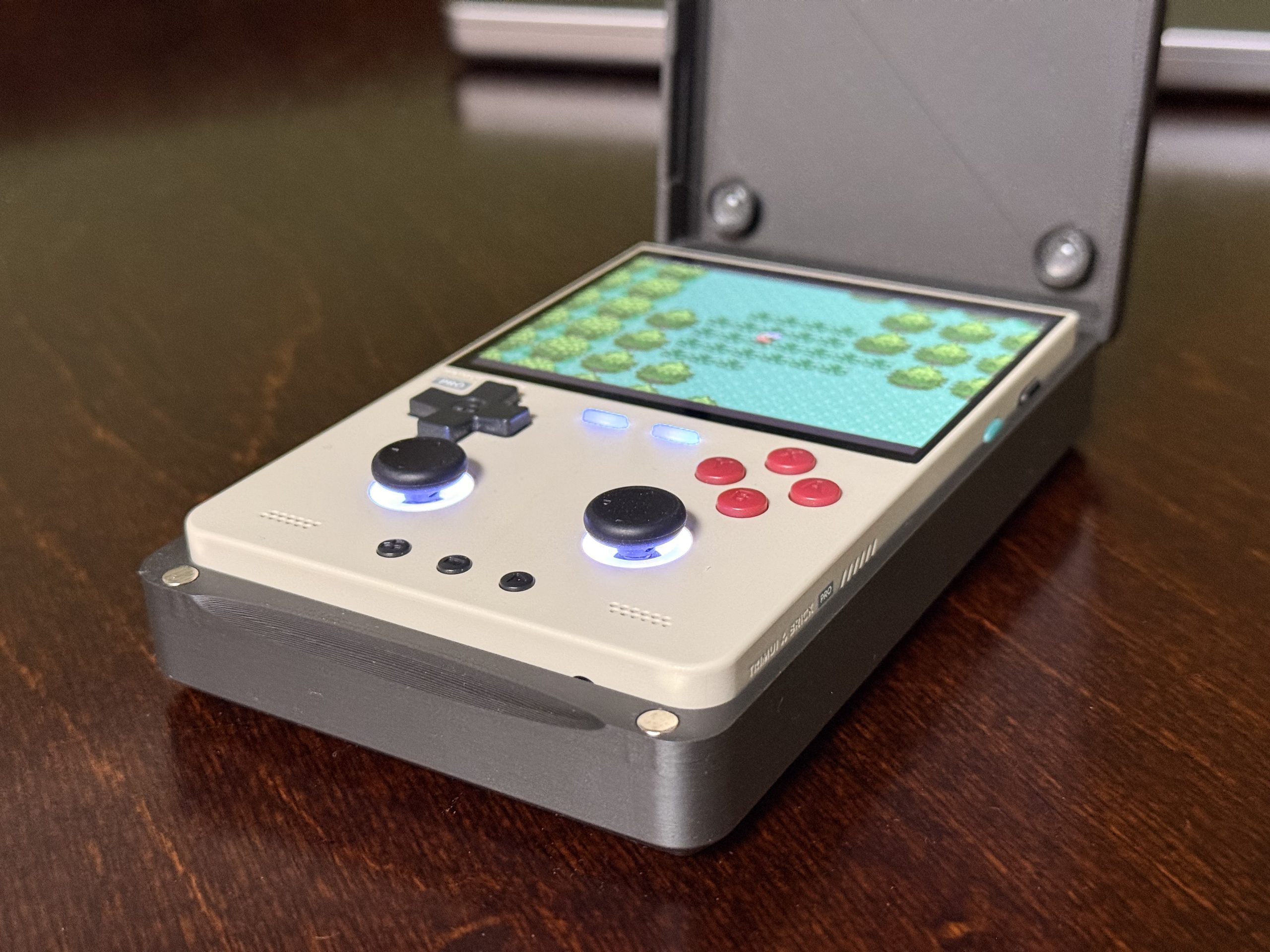
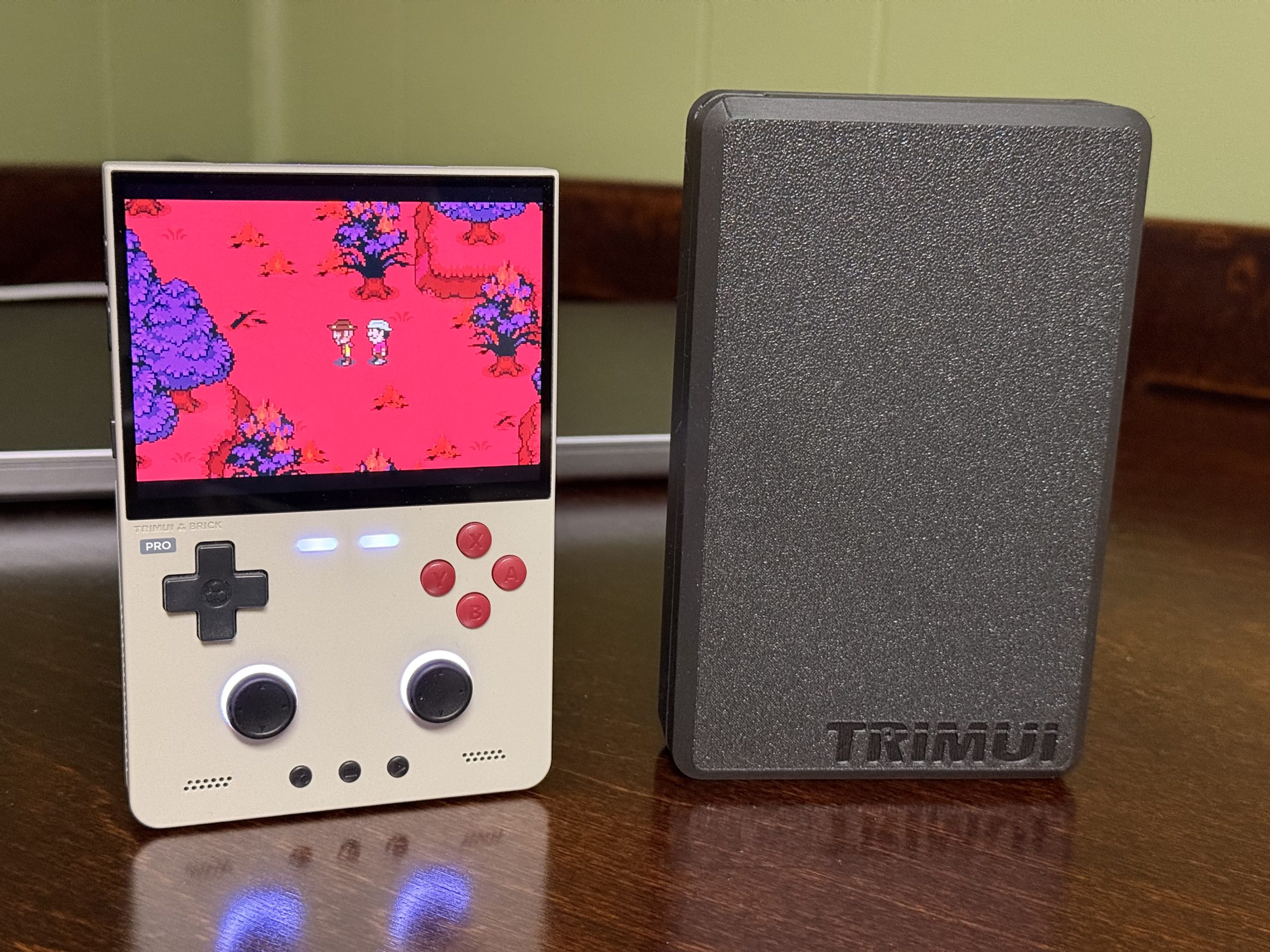
This is the section that actually matters most to me, since half of my job as a reviewer here is figuring out how gear actually lives in a bag, not just how it performs on a bench. At 130 × 86 × 22mm, the Brick Pro is noticeably chunkier than the original Brick. It’s not going to vanish into a skinny jeans pocket the way the smaller model could. Think closer to a thick stack of index cards than a deck of playing cards. It still fits comfortably in a jacket pocket or the front pocket of a backpack, and it slides right into any padded tech pouch or handheld-specific case without a fight.
Where it really shines is as part of a rotation. I often carry two handhelds at once between gigs or on trips (my Steam Deck OLED for anything demanding or a Switch OLED for multiplayer, and something smaller and more portable for the in-between moments where I don’t want to risk my more expensive hardware getting knocked around. The Brick Pro slots perfectly into that last role. It’s light enough at 236g that it doesn’t add meaningful weight to a bag that already has a laptop or trumpet mutes in it, and it’s rugged-feeling enough that I don’t baby it the way I do pricier gear. Tossed into the same pouch as a wallet, keys, and a charging cable, it doesn’t need to be treated like glass. The plastic shell shrugs off the kind of everyday bumps that would worry me on a metal-bodied device.
If you’re building out a bag specifically to carry multiple handhelds plus daily essentials, the Brick Pro’s size is very manageable. It’s not the smallest option on the market anymore, but it’s still well within the range where “grab it on the way out the door” is a realistic habit rather than a hassle.
Connectivity & Output – 7/10
The USB-C port doubles as a DP Alt Mode video output, which means you can hook the Brick Pro up to a monitor or TV and get 1080p at 60Hz. This is a genuinely nice option if you want to play something on the big screen without buying a separate console. That’s the highlight here.
On the wireless side, it’s a step behind the times: Wi-Fi 4 (802.11 b/g/n) and Bluetooth 4.2 are both older standards. For local multiplayer and basic downloads it’s fine, but if you’re leaning on Bluetooth controllers or headphones regularly, don’t expect the rock-solid connection you’d get from a more modern chipset.
Value – 9/10
At right around $100, the Brick Pro is competing in one of the most crowded corners of the handheld market, and it holds its own. You’re getting a screen that punches well above its price class, a battery that will actually get you through a travel day, real analog sticks with Hall effect sensors that won’t drift, a CrossMix OS experience that feels genuinely premium for the price, and a design language that still feels distinct from the sea of Anbernic and Miyoo clones out there. It’s not the cheapest way into a handheld built for 2D and PS1-era games; the original Brick or a Miyoo Mini Plus will save you money if a smaller screen doesn’t bother you. But if the screen size was your one complaint about the original Brick, this is a well-priced fix. Just remember that my review unit’s loaded 256GB card was a review perk from LITNXT, not a guaranteed inclusion. Check the specific bundle and storage tier before you check out.
Who Should Buy This
Buy the Brick Pro if you liked the idea of the original Brick but wanted a bigger screen and real analog sticks, and your library mostly lives in the 8-bit-through-PS1 world. It’s also a great pickup if you want a secondary handheld to toss in a bag alongside your main system; something you’re not precious about but still enjoy using. Skip it if raw horsepower across every generation is your priority (look at the Brick Hammer Pro U or a Retroid instead), or if ultra-small pocketability was the whole appeal of the original Brick for you.
Thanks to LITNXT
Big thanks again to LITNXT for sending this unit over for review. They carry a genuinely huge catalog of retro handhelds and accessories (Miyoo, Anbernic, Retroid, AYN, and the full TrimUI lineup among them) and in my experience their customer service and packaging have been solid, which matters a lot when you’re shipping electronics internationally. If you want to check out the TrimUI Brick Pro for yourself, you can find it directly on their site here: